Stop buying the ‘idea’ of heart health and start producing the medicine. We’ve been taught to be consumers of heart health, buying processed fixes in boxes. 2026 is the year of the Producer—where you craft your own potent, living heart extracts from your own backyard garden. This shift represents a transition from passive consumption to active pharmacological independence.
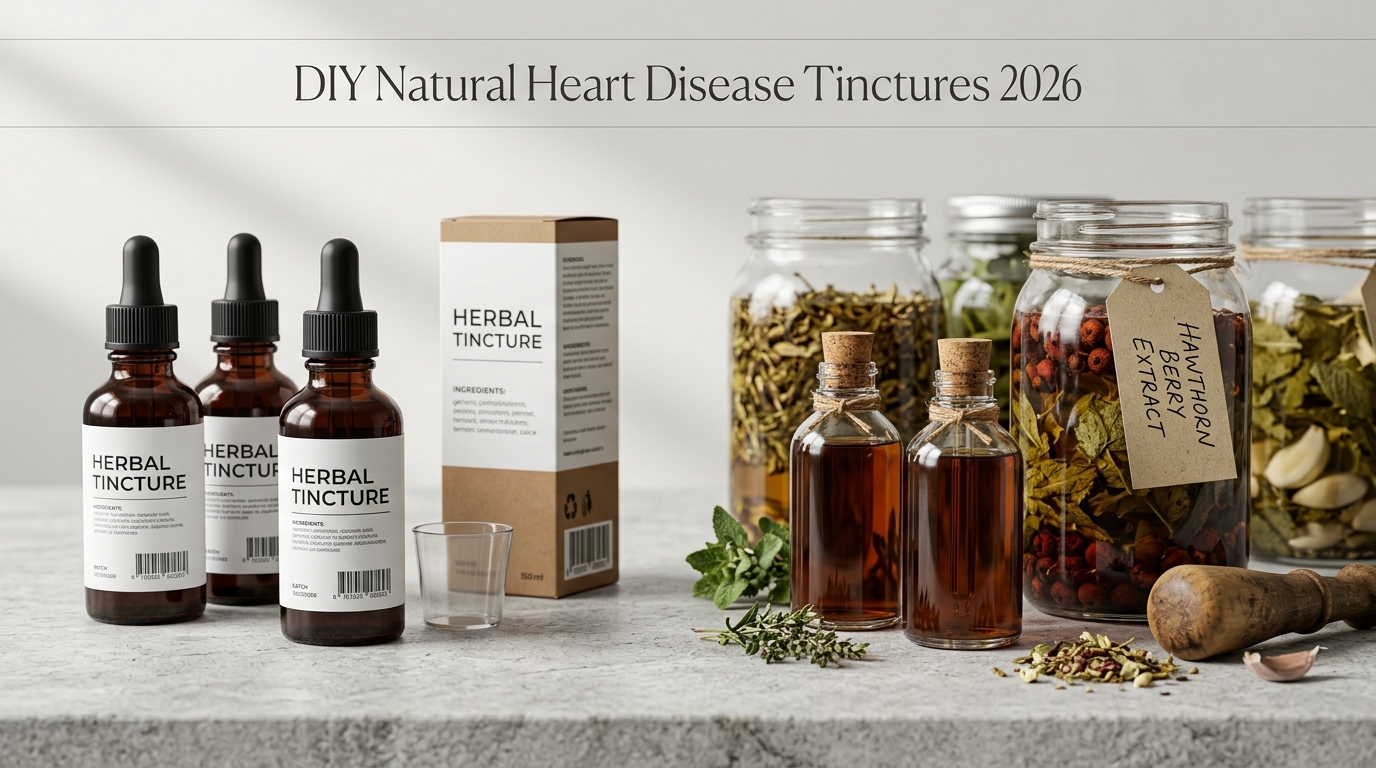
The modern medical supply chain often prioritizes shelf-life and standardized logistics over phytochemical density. When you produce your own extracts, you control the extraction parameters, the solvent quality, and the harvest timing. This ensures a high concentration of active compounds like oligomeric proanthocyanidins (OPCs) and flavonoids that are essential for cardiovascular maintenance.
Integrating these processes into a daily routine transforms the garden into a functional laboratory. It requires a technical understanding of botanical components and solvent interactions. This guide provides the mechanical framework for establishing a home-based cardiac tincture production system.
Diy Natural Heart Disease Tinctures 2026
Diy natural heart disease tinctures 2026 refers to the systematic extraction of therapeutic compounds from cardiotonic plants using high-purity solvents. In technical terms, a tincture is a hydro-ethanolic solution designed to pull both water-soluble and alcohol-soluble constituents from plant matter. This method preserves the chemical profile of the plant for years, offering a stable delivery system for heart-supportive molecules.
In the 2026 landscape, the focus has shifted toward decentralized health production. Instead of relying on mass-produced capsules that may contain oxidized oils or fillers, producers use fresh botanical material. This is particularly relevant for heart health, where the volatility of certain antioxidants requires immediate processing after harvest to maintain biological activity.
Common applications involve using these tinctures as metabolic modulators. For instance, compounds found in Hawthorn (Crataegus) act as mild vasodilators and ACE inhibitors. By creating these extracts at home, the user ensures that the “medicine” is a living reflection of the soil and climate in which the plants were grown, maximizing the energetic and chemical output of the backyard garden.
Mechanics of Phytochemical Extraction
Successful extraction relies on the principle of solubility. Different cardiac-active compounds require specific solvent concentrations to break the cellular walls of the plant material. The two primary solvents used are ethanol (alcohol) and distilled water. Ethanol acts as the primary preservative and solvent for resins, alkaloids, and many flavonoids, while water extracts mucilage and certain tannins.
To begin the process, the producer must determine the herb-to-solvent ratio. A standard professional ratio is 1:5 for dried material and 1:2 for fresh material. This means for every 100 grams of plant matter, you utilize 500 milliliters or 200 milliliters of solvent, respectively. The ethanol percentage typically ranges from 40% to 95%, depending on the moisture content of the plant and the target compounds.
The maceration process involves placing the plant material in a glass vessel, covering it with the menstruum (solvent), and sealing it. Over a period of 4 to 6 weeks, kinetic energy and osmotic pressure draw the medicinal constituents into the liquid. Regular agitation of the vessel ensures that the solvent maintains maximum contact with all surface areas of the botanical material, preventing saturation pockets.
Core Botanical Profiles for Cardiac Support
Targeting heart health requires a diversified approach to botanical selection. Each plant offers a specific mechanical benefit to the cardiovascular system.
Hawthorn (Crataegus monogyna) is the primary cardiotonic. It contains high levels of bioflavonoids that strengthen the heart muscle and improve coronary blood flow. The berries, leaves, and flowers are all usable, though they peak in chemical density at different times of the year. Hawthorn acts slowly, focusing on long-term structural integrity rather than immediate symptomatic relief.
Motherwort (Leonurus cardiaca) serves as a regulator for the autonomic nervous system’s impact on the heart. It is technically classified as a nervine cardiotonic. It is particularly effective for cardiac issues exacerbated by stress or anxiety, such as palpitations. The bitter alkaloids in Motherwort also support liver function, which is a critical secondary system for blood purification and lipid management.
Garlic (Allium sativum) is utilized for its organosulfur compounds, specifically Allicin. When extracted correctly in a tincture form, garlic acts as a potent vasodilator and platelet aggregation inhibitor. This reduces the mechanical strain on arterial walls by lowering peripheral resistance. Garlic tinctures must be prepared carefully to prevent the degradation of sulfur compounds into less active metabolites.
Benefits of Home-Produced Extracts
The primary advantage of home extraction is the preservation of the “Total Spectrum.” Commercial processes often use harsh solvents like hexane or high-heat spray-drying techniques to create standardized powders. These methods can strip away synergistic co-factors that assist in the absorption and efficacy of the primary active ingredients.
Cost efficiency is another measurable benefit. The price per ounce of a high-quality commercial tincture is significantly higher than the cost of cultivating the raw material and purchasing bulk food-grade ethanol. For a practitioner maintaining a long-term heart health protocol, the savings over several years are substantial.
Control over the “Harvest-to-Maceration” window is perhaps the most critical benefit. Many cardiac-active compounds, such as those found in fresh Milky Oat tops or certain Hawthorn subspecies, begin to degrade within hours of harvest. By processing the material immediately in the backyard lab, the producer captures the peak chemical potential of the plant, resulting in a significantly more potent extract.
Common Technical Pitfalls and Errors
Contamination is the most frequent failure point in home tincture production. Using non-sterile equipment or jars with reactive metal lids can introduce pathogens or cause chemical leaching into the extract. Always use pharmaceutical-grade glass and ensure all tools are sanitized with high-percentage isopropyl alcohol or heat before use.
Incorrect solvent-to-herb ratios can lead to under-extraction or spoilage. If the alcohol percentage drops below 20% due to the moisture content of fresh herbs, the tincture becomes susceptible to mold and bacterial growth. Producers often underestimate the water content in fresh berries, which dilutes the ethanol. Measuring the weight of the herbs and calculating the final ABV (Alcohol By Volume) of the mixture is essential for stability.
Inadequate filtration is another common mistake. Leaving fine particulate matter in the final tincture can lead to sedimentation and eventual oxidation of the liquid. Utilizing multi-stage filtration—starting with a coarse mesh and ending with a fine coffee filter or lab-grade filter paper—ensures a clear, stable product that will not degrade on the shelf.
Limitations and Safety Boundaries
DIY tinctures are intended for chronic cardiovascular support and preventative maintenance. They are not substitutes for emergency medical intervention. In the event of acute myocardial infarction, unstable angina, or severe congestive heart failure, botanical extracts cannot replace mechanical hospital-grade care.
Environmental limitations also play a role. Plants grown in soil contaminated with heavy metals (lead, arsenic, cadmium) will bioaccumulate these toxins. Because tinctures concentrate the constituents of the plant, they also concentrate any toxins present. It is imperative to conduct soil testing in your backyard garden before growing medicinal crops for extraction.
Furthermore, certain cardiac botanicals can interact with prescription medications. For example, Hawthorn can potentiate the effects of digitalis or beta-blockers, potentially leading to bradycardia (abnormally slow heart rate). DIY production requires the user to be their own pharmacologist, necessitating a deep understanding of contraindications and biochemical interactions.
Comparison: Store Bought vs. Home Extracted
| Metric | Store Bought (Commercial) | Home Extracted (Producer) |
|---|---|---|
| Freshness | Often uses dried material stored for 6-18 months. | Can be processed within minutes of harvest. |
| Potency | Standardized to one or two markers (e.g., Vitexin). | Full-spectrum profile with synergistic co-factors. |
| Cost per Ounce | $15.00 – $30.00 average. | $2.00 – $5.00 (variable by solvent source). |
| Transparency | Proprietary blends; source often unknown. | 100% control over soil, water, and seeds. |
Practical Tips for Maximum Potency
Optimizing the extraction requires attention to surface area. Before adding your solvent, finely chop or grind the herbs. For berries like Hawthorn, mashing them to break the outer skin is necessary. For roots like Ginger (a circulatory stimulant), thin slicing across the grain exposes the maximum number of rhizome cells to the ethanol.
Temperature management during maceration can influence the final profile. While high heat should be avoided to prevent volatile oil loss, keeping the maceration vessel in a warm (approx. 25°C or 77°F) dark place can increase the kinetic energy of the molecules, speeding up the extraction. Avoid direct sunlight, as UV radiation causes the photodegradation of delicate flavonoids.
Use the “Percolation Method” if you require an extract immediately. This involves packing a specialized glass cone with finely powdered herb and slowly dripping solvent through it. This method mimics laboratory chromatography and can produce a finished 1:5 tincture in 24 to 48 hours, though it requires a higher skill level and specialized glassware compared to the standard maceration method.
Advanced Considerations: Dual Extraction
Some cardiac-supportive fungi and woody barks, such as Reishi (Ganoderma lucidum) or Arjun bark (Terminalia arjuna), contain compounds that are not fully soluble in alcohol alone. These require a “Dual Extraction” process to be truly effective. This involves first performing an alcohol maceration for several weeks, then simmering the remaining marc (spent plant material) in distilled water to extract water-soluble polysaccharides.
Once the hot water decoction is complete and reduced through evaporation, it is combined with the original alcohol extract. The final mixture must be calculated to ensure the total alcohol content remains above 25% to maintain shelf stability. This advanced technique produces a “Power Tincture” that addresses both the structural and immune-related aspects of heart health.
Scaling your production for a full year requires a “Yield Calculation.” Estimate a daily dose of 5ml (approx. one teaspoon) taken twice daily. This equates to roughly 3.65 liters of tincture per year. Planning your garden layout to produce enough raw biomass for this volume ensures you remain a Producer and never have to return to the consumer model.
Example Scenario: The Hawthorn Berry Protocol
Consider a producer aiming to create 1 liter of Hawthorn berry tincture. The producer harvests 500 grams of fresh berries from their backyard in late September. Because the berries are fresh, they use a 1:2 ratio. They weigh 500g of berries and place them in a 1.5-liter glass jar.
They then add 1,000ml of 75% ABV organic cane alcohol. This higher percentage is chosen because the water content within the berries will naturally dilute the alcohol to approximately 50-55% ABV once equilibrium is reached. The jar is sealed and stored in a dark cabinet.
For the next 42 days, the jar is shaken daily for 60 seconds. On the 43rd day, the mixture is poured through a stainless steel sieve to remove the bulk berries, then through a 10-micron filter to remove sediment. The resulting liquid is a deep ruby red, rich in proanthocyanidins. This liter provides a 200-day supply of cardiac support at a 5ml daily dose, costing only the price of the alcohol and the time spent gardening.
Final Thoughts
Transitioning from a consumer to a producer of heart health tools is a fundamental shift in personal autonomy. By mastering the mechanics of DIY natural heart disease tinctures 2026, you move beyond the limitations of store-bought products and tap into the raw potential of botanical medicine. The process is precise, data-driven, and highly rewarding for those willing to learn the chemistry of extraction.
The heart is a mechanical pump that responds to the chemical inputs it receives. Providing it with high-potency, full-spectrum extracts created in a controlled environment is the most efficient way to maintain its function over time. As you refine your techniques, your backyard becomes more than a garden; it becomes a sophisticated production facility for longevity.
Start with one or two foundational plants like Hawthorn or Motherwort. Document your ratios, extraction times, and the physiological effects you observe. Through iterative improvement and technical diligence, you will build a robust home apothecary that secures your cardiovascular health for the years to come.