Your heart doesn’t just need a pill; it needs a habitat. Urban environments are designed for efficiency, not heart health. In 2026, we’re using ‘Wild’ therapy—forest-derived aerosols called phytoncides—to naturally lower blood pressure and heal the vascular system. This transition represents a shift from reactive pharmacology to proactive environmental engineering.
Heart health is often managed through synthetic chemical intervention, yet the physiological impact of the surrounding atmosphere is frequently ignored. Concrete infrastructures contribute to chronic sympathetic nervous system activation, which increases the mechanical load on the heart. Transitioning to a forest-based habitat mitigates these stressors through specific biochemical pathways.
Physiological data indicates that the human cardiovascular system responds more efficiently to natural volatile organic compounds than to high-stress urban environments. Understanding the mechanics of forest bathing allows for the optimization of vascular health without the side effects associated with traditional beta-blockers or ACE inhibitors.
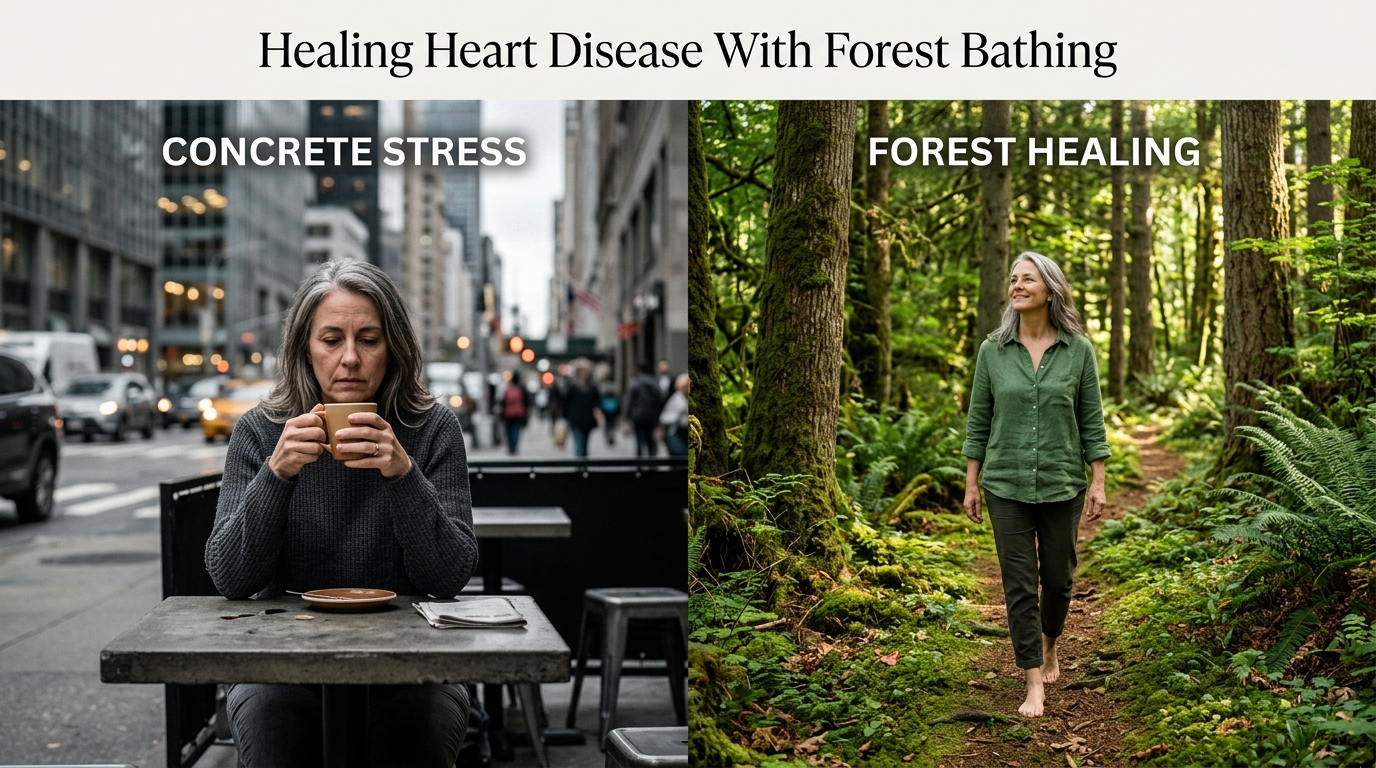
Healing Heart Disease With Forest Bathing
Forest bathing, or Shinrin-yoku, is the practice of immersing the body in a forest atmosphere to utilize airborne chemicals for physiological repair. This is not a recreational walk; it is a clinical application of forest-derived aerosols known as phytoncides. These compounds are antimicrobial volatile organic compounds emitted by plants, such as ?-pinene and limonene, to protect against decay and insects.
Research conducted in Japan and South Korea confirms that inhaling these compounds reduces the concentration of stress hormones like cortisol and adrenaline. When these hormones remain elevated, they cause arterial constriction and increase the risk of myocardial infarction. Forest bathing functions as a mechanical reset for the autonomic nervous system.
In real-world applications, forest therapy is used as a supplementary treatment for hypertension and chronic heart failure. It serves as a biological interface where the lungs filter beneficial terpenes into the bloodstream, directly influencing the cardiac regulatory centers in the brain. This process optimizes heart rate variability and enhances the flexibility of the vascular walls.
How the Physiological Mechanism Functions
The process of healing via forest bathing involves specific biochemical interactions between the respiratory system and the autonomic nervous system. When an individual enters a dense forest, the concentration of phytoncides increases, reaching levels that trigger systemic responses.
Biochemical Pathways of Phytoncides
Phytoncides enter the bloodstream through the alveoli in the lungs. Once absorbed, these compounds act on the central nervous system by increasing the activity of the parasympathetic nervous system. This specific branch of the nervous system is responsible for the ‘rest and digest’ functions, which directly counteracts the ‘fight or flight’ response triggered by urban noise and light pollution.
The reduction in sympathetic nerve activity leads to a decrease in heart rate and a lowering of blood pressure. This mechanical easing of the heart’s workload allows the vascular endothelium to undergo repair. Improved endothelial function is critical for preventing the buildup of plaque in the arteries.
Steps for Optimized Forest Therapy
To maximize the therapeutic output of forest bathing, specific operational protocols must be followed. Random movement through a park is insufficient for significant cardiac optimization.
- Select a location with high densities of coniferous trees, such as pine or cedar, which emit higher concentrations of phytoncides.
- Maintain a slow walking pace, typically under 2 kilometers per hour, to prevent an increase in metabolic heart rate.
- Engage in deep diaphragmatic breathing to increase the volume of aerosol intake per breath.
- Spend a minimum of 120 minutes within the forest canopy to reach the threshold of physiological change.
- Repeat the exposure at least once every 30 days to maintain elevated levels of Natural Killer (NK) cells and stable blood pressure.
Benefits of Environmental Cardiac Optimization
The primary advantage of forest-derived therapy is the measurable reduction in systemic inflammation. Chronic inflammation is a significant driver of atherosclerosis and other cardiovascular diseases. Forest bathing lowers the levels of pro-inflammatory cytokines, which reduces the mechanical stress on the heart’s valves and chambers.
Improved Heart Rate Variability (HRV) is another critical metric. A higher HRV indicates a resilient and responsive heart. Forest environments consistently produce higher HRV readings compared to urban settings, suggesting that the heart is operating under less mechanical strain. This leads to a higher threshold for physical and emotional stress.
Furthermore, the secondary benefits include a boost in the immune system. The increase in NK cell activity, which can last for up to 30 days after a single intensive forest session, provides a buffer against systemic infections that could otherwise strain a compromised heart. This makes forest therapy a high-efficiency preventive measure for long-term vascular maintenance.
Challenges and Common Implementation Mistakes
One frequent error is the confusion of “green space” with “forest habitat.” A manicured city park does not possess the same aerosol density as an old-growth forest. Urban parks often have high levels of noise pollution and ozone, which can counteract the benefits of the limited phytoncides present.
Another mistake is maintaining an athletic mindset during the session. Many individuals attempt to combine forest bathing with high-intensity interval training or vigorous hiking. This increases heart rate and activates the sympathetic nervous system, effectively nullifying the calming biochemical effects of the forest aerosols.
Monitoring failure is also common. Without tracking heart rate variability or blood pressure before and after the session, it is difficult to calibrate the required duration and frequency of exposure. Effective therapy requires data-driven adjustments based on individual physiological responses.
Limitations and Environmental Constraints
Forest bathing is not a substitute for emergency cardiac care or surgical intervention. In cases of acute arterial blockage or valve failure, mechanical surgery is required. Forest therapy is a preventative and rehabilitative tool, not an emergency procedure.
Environmental factors also limit the efficacy of the practice. Seasonal changes affect the emission of phytoncides; deciduous trees provide lower concentrations during winter months. Additionally, individuals with severe allergies to pollen or specific tree molds may find that the respiratory irritation outweighs the cardiovascular benefits.
Geographical constraints are also a factor. Those living in hyper-urbanized environments without access to dense forests must rely on synthesized aerosols or indoor air filtration systems, which are currently less effective than natural ecosystems. The synergy of soil microbes, humidity, and varied terpenes found in a living forest is difficult to replicate in a laboratory setting.
Concrete Stress vs Forest Healing
The following table compares the mechanical and physiological impacts of urban environments versus forest environments on the cardiovascular system.
| Metric | Concrete Environment (Stress) | Forest Environment (Healing) | |
|---|---|---|---|
| Primary Nervous System State | Sympathetic Dominance (High Stress) | Parasympathetic Dominance (Rest) | |
| Average Heart Rate | Elevated (75-90 bpm) | Reduced (60-70 bpm) | |
| Blood Pressure Impact | Vasoconstriction (Higher Pressure) | Vasodilation (Lower Pressure) | |
| Chemical Exposure | Nitrogen Dioxide, Ozone, Particulates | Phytoncides, Terpenes, Oxygen | |
| Heart Rate Variability (HRV) | Low (Low Resilience) | High (High Resilience) | |
| Cortisol Levels | Consistently High | Significant Reduction |
Practical Tips for Vascular Rehabilitation
To achieve the best results, implement these technical adjustments to your forest therapy routine. Focus on the density of the air and the timing of your exposure.
- Aim for “peak aerosol” hours. Phytoncide concentrations are generally higher during the midday heat when trees are most active in their chemical emissions.
- Use a wearable device to monitor your HRV in real-time. If your HRV does not increase during the session, you may be moving too fast or the environment may be too noisy.
- Silence all electronic devices. Digital notifications trigger micro-spikes in cortisol that disrupt the vascular relaxation process.
- Hydrate with water containing minimal synthetic additives. Proper hydration ensures that the blood viscosity remains low, allowing for easier circulation during the vasodilation phase.
- Focus your vision on the “fractal patterns” of the canopy. The visual processing of complex natural patterns has been shown to reduce amygdala activity, further lowering heart rate.
Advanced Considerations for Practitioners
For those looking to optimize their cardiac habitat further, consider the specific terpene profiles of different forest types. Research suggests that d-limonene and ?-pinene are particularly effective for vascular health. Pinaceae (pine family) forests are superior for these specific compounds compared to Fagaceae (oak/beech family) forests.
Atmospheric pressure and humidity also play a role in the suspension of phytoncides. High-humidity environments, such as temperate rainforests, allow the aerosols to remain suspended longer and at higher concentrations. Practitioners should seek out these high-density zones for maximum absorption efficiency.
Consider the role of the soil microbiome. Spending time in a forest exposes the individual to *Mycobacterium vaccae*, a soil bacterium that has been linked to increased serotonin production and reduced systemic inflammation. This interaction adds another layer of mechanical support for the heart by stabilizing the mood and reducing the chemical triggers of stress.
Scenario: Rehabilitating Stage 1 Hypertension
Consider a 45-year-old male living in a high-density urban center with Stage 1 hypertension (135/85 mmHg). His environment is characterized by constant traffic noise and poor air quality, which keeps his sympathetic nervous system in a state of chronic arousal.
By implementing a protocol of four hours of forest bathing per week in a mature coniferous forest, the individual targets a reduction in systemic cortisol. During these sessions, his heart rate drops from a resting average of 82 bpm to 68 bpm. Over a six-week period, the inhalation of ?-pinene promotes persistent vasodilation.
As the vascular resistance decreases, the blood pressure readings stabilize at 122/78 mmHg. This change is achieved without pharmaceutical intervention, solely by modifying the habitat and utilizing the forest’s chemical output to recalibrate the heart’s mechanical operation.
Final Thoughts
Optimizing the heart’s habitat is a fundamental requirement for long-term cardiovascular health. Forest bathing provides a sophisticated, aerosol-based delivery system for compounds that directly lower blood pressure and improve heart rate variability. It is a mechanical solution to the biological stressors imposed by modern urban living.
Transitioning from a concrete-dominated environment to a forest-integrated lifestyle allows the vascular system to operate at peak efficiency. By following strict protocols for duration, breathing, and environmental selection, individuals can achieve significant improvements in heart health that pharmaceuticals alone cannot replicate.
Experiment with different forest densities and monitor your physiological data. The integration of wild therapy into a standard medical regimen represents the future of vascular maintenance. Consistency in exposure is the key to maintaining a resilient and efficient cardiovascular system.